Shop Analyzer
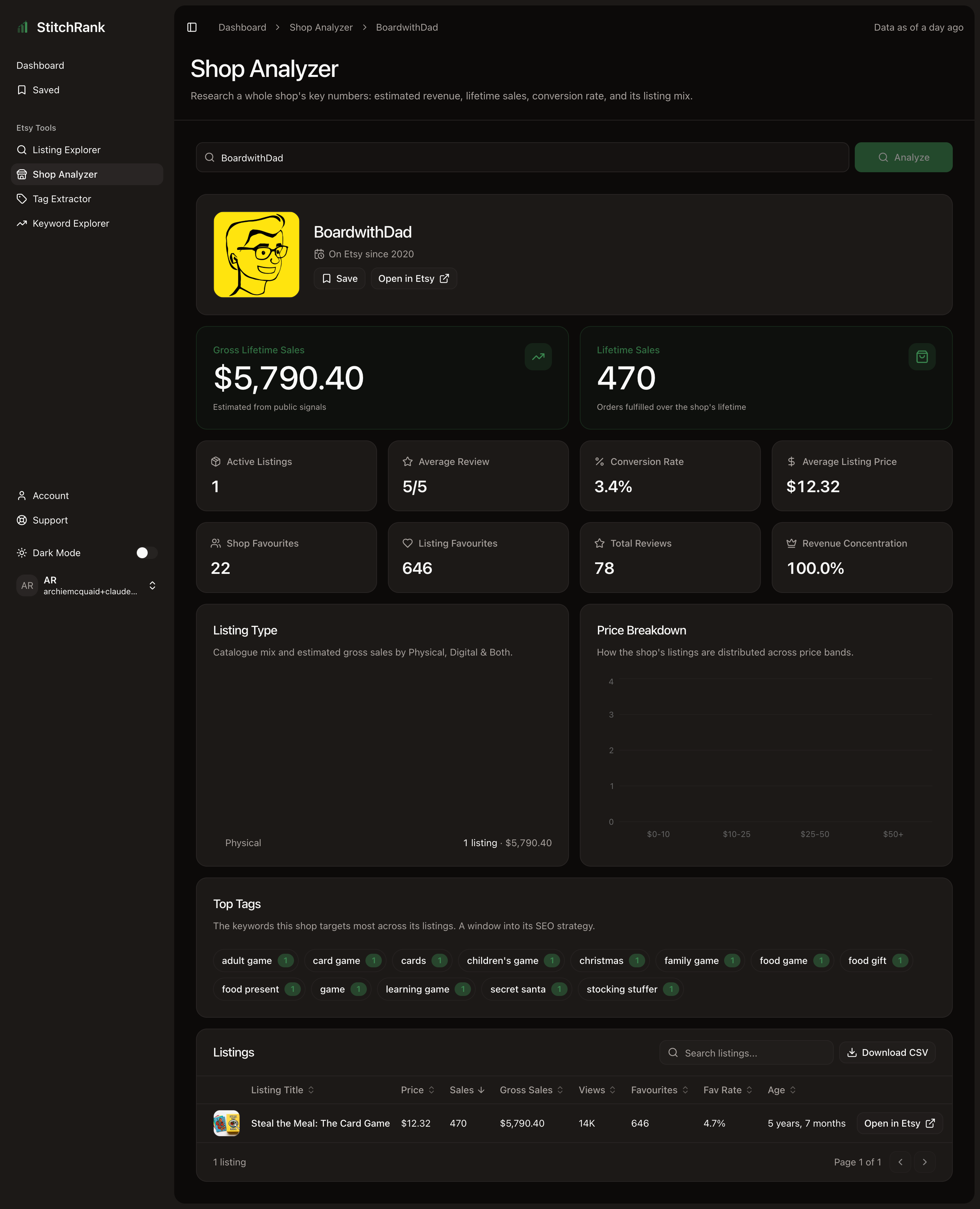
Shop Analyzer turns any Etsy shop into a business x-ray. Etsy shows you a sold count and a star rating; CraftRank estimates the numbers that actually matter: how much money the shop is making, which listings carry it, and how it prices and positions itself. Use it to prove a niche has money in it before you commit, or to benchmark your own shop against a leader.
When to use it
- You found a niche and want to confirm someone is genuinely making money in it.
- You want to benchmark your own shop's scale, pricing, and conversion against a top seller.
- You are scouting a competitor to understand how their catalogue is structured.
- You want to find a shop's hero listings so you can study or out-compete them.
What you get
- Shop totals estimated gross lifetime sales and the shop's lifetime order count.
- Conversion rate the share of views that turn into orders across the shop's listings.
- Pricing average listing price and a price distribution across the catalogue. Listings that offer variations count at their cheapest option, the only price Etsy publishes, so both figures use listed starting prices. The tile tells you what share of the catalogue that covers.
- Top listings the listings driving the most sales and views.
- Revenue concentration how much of the shop's revenue sits in its top few listings.
- Trust signals review count, average rating, favourites, and active listing count.
How to read the results
For scale, read gross lifetime sales alongside the lifetime order count. A big sold count on cheap items is a very different business from a smaller count on high-ticket items. Where a shop leans on listings with variations, the gross uses listed starting prices, and actual options purchased, discounts, and historical prices may differ: see Methodology for why.
The conversion rate is the one number here you can trust most: it is measured from the shop's own sales and views, not estimated from an industry average. Treat it as a quality signal. A higher conversion rate means listings that turn browsers into buyers, usually through strong photos, pricing, and reviews. If you are benchmarking your own shop, this is the figure to beat.
Revenue concentration tells you the shop's shape. If a handful of listings carry most of the revenue, the shop is built on a few heroes. If revenue is spread evenly, the niche rewards breadth and volume instead.
Read price distribution to see how the shop positions itself: clustered low (volume play), clustered high (premium play), or spread across tiers.
Remember the sales and revenue figures are estimates from public data, so treat them as directional. They are reliable for comparing shops and spotting scale, less so as an exact dollar figure. See Methodology for how they are built.
Turn it into action
- High concentration the shop lives or dies on a few listings. Open those top listings in Listing Explorer and reverse-engineer what makes them win.
- Even spread the niche rewards a deep catalogue. Plan for breadth, not one hero product.
- Benchmarking your own shop compare your conversion rate and average price against the leader, then fix the gap that is largest.
To pull the shop's tag patterns, use Tag Extractor. For the end to end flow, see Audit your own shop.
Related
- Next: Listing Explorer to dig into a single listing.
- Next: Tag Extractor to pull the shop's tags.